
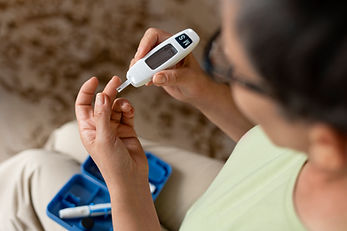
Empowering Your Health: Prediabetes Guidance
Dr. Divya C. Ragate offers expert diagnosis and personalized management of Prediabetes and Insulin Resistance in Bengaluru, focusing on blood sugar optimization, targeted lifestyle and medication therapy, specialized nutritional guidance, assessment of metabolic risk factors, prevention of Type 2 diabetes, and comprehensive long-term endocrine care.
Prediabetes & Insulin Resistance
What is Insulin Resistance?
Insulin resistance occurs when cells in your muscle, fat, and liver do not respond effectively to insulin—the hormone produced by the pancreas that allows glucose (sugar) in your blood to enter cells for energy.
To overcome this resistance and keep blood sugar stable, the pancreas overproduces insulin (hyperinsulinemia). Over time, the pancreas can no longer keep up with the high demand.
What is Prediabetes?
Prediabetes is the metabolic state where blood sugar levels are higher than normal, but not yet high enough to be classified as Type 2 diabetes. It is the direct consequence of long-term, unmanaged insulin resistance.
Symptoms & Early Warning Signs
Insulin resistance and prediabetes are often called "silent conditions" because they frequently develop without prominent symptoms. However, subtle physical indicators may be present:
-
Acanthosis Nigricans: Darkened, velvety skin patches, most commonly found on the back of the neck, armpits, or groin.
-
Skin Tags: Small, benign skin growths in body creases.
-
Abdominal Obesity: Centralized weight accumulation around the waist line line.
-
Persistent Fatigue: Feeling tired or sluggish, especially after carbohydrate-heavy meals.
-
Intense Sugar Cravings: Constant cravings for simple carbohydrates or sweets due to impaired cellular glucose absorption.
Diagnostic Criteria & Testing
-
HbA1c (3-Month Average Blood Sugar):
-
Prediabetes Range: 5.7% to 6.4%
-
Normal Range: Below 5.7%
-
-
Fasting Blood Glucose (FBG):
-
Prediabetes Range: 100 to 125 mg/dL
-
Normal Range: 70 to 99 mg/dL
-
-
Oral Glucose Tolerance Test (OGTT - 2-Hour Post Glucose):
-
Prediabetes Range: 140 to 199 mg/dL
-
Normal Range: Below 140 mg/dL
-
-
Fasting Serum Insulin & HOMA-IR:
-
Prediabetes / Insulin Resistance: Evaluates hyperinsulinemia and calculates the insulin resistance index
-
Normal Baseline: Fits within standard age- and gender-adjusted laboratory baselines
-
Medical Management & Treatment Plan
The progression from prediabetes to Type 2 diabetes is not inevitable. With structured, evidence-based care, insulin resistance can be managed and prediabetes reversed.
-
Personalized Nutrition
-
Structured Physical Activity
-
Medical Interventions & Pharmacotherapy
Long-Term Care & Prevention Strategy
Continuous monitoring under specialized endocrine care ensures sustained health outcomes:
-
Regular Monitoring: HbA1c and lipid profiling every 3 to 6 months.
-
Screening for Associated Conditions: Monitoring for PCOS, fatty liver disease (MASLD/NAFLD), and hypertension.
-
Targeted Weight Reduction: Achieving and maintaining even a 5% to 10% weight loss significantly improves insulin sensitivity.
Comprehensive Prediabetes & Insulin Resistance Care
Dr. Divya C. Ragate provides personalized diagnosis and comprehensive management of Prediabetes and Insulin Resistance, focusing on early metabolic risk detection, custom nutrition and exercise strategies, proactive complication prevention, and continuous endocrine guidance. Care is tailored to reverse insulin resistance, restore metabolic balance, and support the patient’s long-term health needs.

Managing Pancreatic Diabetes for Better Health
Living well with prediabetes and insulin resistance involves taking proactive steps to optimize blood sugar levels, restore metabolic health, and prevent progression to Type 2 diabetes. At Dr. Divya C. Ragate’s Clinic, we provide personalized care and practical guidance to help patients reverse insulin resistance effectively. Through individualized treatment plans, tailored nutrition and exercise strategies, medication management when required, regular glucose monitoring, and ongoing endocrine care, patients can take an active role in their health. Our goal is to empower long-term metabolic recovery, reduce the risk of future complications, and help individuals maintain a healthier and more fulfilling life.